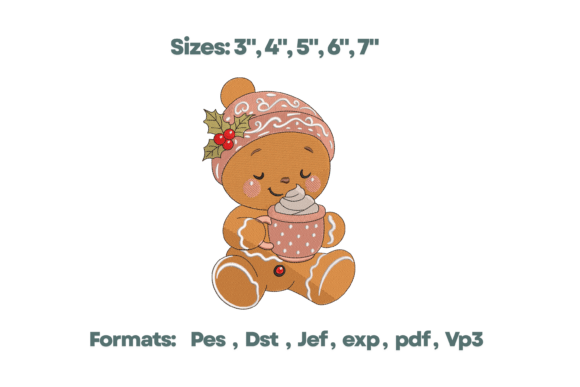
Review: Christmas Cookies Embroidery Design
As a designer who has spent years digitizing and stitching thousands of files, I have developed a keen eye for what works in the hoop versus what looks good only on a screen. When I first loaded the Christmas Cookies Embroidery Design into my software, I was looking for more than just festive cheer. I needed to know if this file had the structural integrity to hold up on real fabrics, from thick towel loops to stretchy sweatshirt fleece. The initial impression is promising; the layout feels balanced, avoiding the common pitfall of overly dense centers that cause puckering.
First Impressions and Visual Personality
The charm of this design lies in its whimsical simplicity. It does not try to be a photorealistic cookie with hundreds of tiny satin stitches that might break under tension. Instead, it uses clean lines and playful shapes that translate well into thread. The mood is warm and inviting, perfect for the holiday season without feeling cluttered. For an embroidery project intended to bring personality to home decor or apparel, this balance is crucial. A design that is too complex can look messy on textured fabrics, while one that is too simple might lack impact. This machine embroidery design strikes a nice middle ground, offering enough detail to be recognizable as a festive treat while maintaining clarity after stitching.
Real-World Application: The Tote Bag Test
To truly evaluate a file, I always imagine it on a specific product. Let’s consider a custom embroidered tote bag, a popular item for Etsy sellers and craft fairs. I visualized this design placed centrally on a natural cotton canvas. The Christmas Cookies Embroidery Design would serve as a focal point, perhaps accompanied by a simple monogram below it. Because the design is not excessively large, it fits comfortably within standard hoop sizes, leaving room for personalization.
In this scenario, the stitch types matter. If the design relies heavily on fill stitch areas for the cookie base, it provides a solid, durable surface that withstands the wear and tear of a grocery bag. However, if it uses primarily running stitch outlines, it offers a lighter, more delicate look suitable for decorative pillows rather than heavy-duty use. Based on the description of sprucing up fabrics with a fun touch, I anticipate a mix that prioritizes visual appeal without excessive bulk. This makes it an excellent choice for a handmade product that needs to look professional yet approachable.
Versatility Across Product Lines
Beyond tote bags, this design shows promise for various custom apparel items. Imagine it stitched on the chest of a crewneck sweatshirt. The whimsical nature of cookies pairs well with the cozy feel of fleece. For sweatshirt embroidery, you must consider the fabric’s stretch. A design with moderate stitch density is ideal here, as high density can cause the garment to pucker or distort. This design appears to have an open enough structure to breathe, reducing the risk of pulling on knit fabrics.
It also translates well to smaller items. As an embroidered patch or an accent on a baby onesie, the scale seems appropriate. Baby embroidery requires softness and safety, so ensuring there are no long, loose threads or overly dense areas that could irritate sensitive skin is key. The charming aesthetic fits perfectly for holiday embroidery gifts, adding a personal touch to personalized gift sets. For small shop product lines, having a versatile asset like this allows you to create cohesive collections across different categories, from kitchen towels to nursery decor.
Technical Considerations and Fabric Choices
While the design is charming, practical application requires caution. When working with textured fabric like terry cloth towels, the details might get lost if the stitches are too fine. In such cases, using a cutaway stabilizer is non-negotiable to support the stitches and prevent sinking. For thin or stretchy materials, a tear-away stabilizer might suffice, but testing is essential.
Color selection plays a huge role in the final outcome. Since this is a cookie design, traditional browns, creams, and reds for icing work well. However, do not be afraid to experiment with thread colors to match your brand palette. A monochrome version in white thread on a dark navy towel can look incredibly sophisticated. Always check the contrast. If the design includes tiny details, ensure they are visible against the background fabric. Testing on scrap fabric before committing to the final finished product saves time and materials.
Commercial Use and Brand Consistency
For commercial embroidery professionals and craft business owners, consistency is vital. This design can help build brand recognition if used repeatedly across different items. Whether it is part of a printable mockup for online listings or a physical sample at a craft fair, the quality of the stitch-out reflects on your brand. A clean, well-digitized file builds customer trust. Buyers engage more with products that look professionally made, and this design supports that goal by offering a polished look without requiring advanced editing skills.
Before selling items made with this digital embroidery file, always confirm the licensing terms. Most designers allow commercial use for finished physical goods, but restrictions may apply to digital redistribution. Ensure you are compliant to protect your design assets and business reputation.
Final Designer Notes
To get the best results from the Christmas Cookies Embroidery Design, follow these practical steps:
- Test on Scrap Fabric: Always stitch a test piece on the same material you plan to use for the final item. This reveals any tension issues or density problems.
- Check Hoop Size: Confirm the design fits your machine’s hoop. While it seems versatile, knowing the exact dimensions prevents last-minute resizing errors.
- Review Stitch Density: If the design feels too heavy, consider reducing the density slightly in your software, especially for stretchy fabrics.
- Inspect Small Details: Zoom in on the digital preview. Are there tiny jumps or complex corners that might cause thread breaks? Simplify if necessary.
- Use Proper Stabilizer: Match the stabilizer to the fabric weight. Heavy fabrics need less support, while light or stretchy fabrics need robust stabilization.
- Verify License: Double-check the usage rights provided with the file to ensure compliance for your specific business model.
In conclusion, this design is a solid addition to any holiday collection. It balances whimsy with practicality, making it suitable for a wide range of embroidery projects. By paying attention to fabric choice, stabilizer, and stitch quality, you can create high-value items that customers will love. Whether you are an experienced Etsy seller or a hobbyist making gifts, this file offers the reliability and charm needed for successful stitching.